
 DE
DE

ESD measurement in industry: What is tested and when
ESD protection zone, yet a discharge occurs? This suggests that there are shortcomings in the ESD protection. There can be many reasons for this: ranging from staff error to worn-away coatings. Without ESD testing, such risks remain undetected – and the resulting damage can prove costly.
Why ESD protection without measurement is merely an assumption
Conductive worktops, specialised furniture, personal earthing and conductive tools – these are essential in electronics manufacturing ESD-compliant workstations as standard. However, once in place, ESD protection does not stop there. Without measurement, safety remains merely an assumption. Whilst electrostatic discharge may feel only briefly uncomfortable to humans – if at all – electronic components are more sensitive. Even low voltages can extensive damage cause.
The problem in ESD protection zones: Discharge characteristics change over time. Coatings wear away with frequent use, some cleaning products leave an additional film on conductive surfaces, and earthing cables can come loose. In addition, staff sometimes act incorrectly without realising it. This can result in the environment no longer being reliably protected against electrostatic discharge. ESD safety should therefore be checked regularly – through professionally conducted ESD measurements.
ESD measurement: This is the standard that matters
The requirements for an ESD control programme are set out in DIN EN IEC 61340-5-1. This standard specifies a particular test procedure and a limit value for each control element. The focus is on resistance measurement. Interestingly, the standard treats any surface on which a component can be placed as a work surface. The test therefore does not end at the edge of the table.
In addition, environmental conditions such as temperature and humidity can be recorded, as they may affect electrostatic charge. Specialised measuring instruments should be used to check:
- Personal earthing (wrist straps, footwear)
- Flooring and earthing systems
- Worktops and storage units
- Containers and means of transport
- Tools
- Ionisers
- selected environmental conditions
Incidentally, the standard does not specify fixed intervals for ESD testing. The frequency of testing is determined as part of the ESD control programme on the basis of risk, usage and process requirements – and should be documented in an ESD control plan. However, two important occasions for testing are the initial test upon Commissioning and the start-up test in accordance with Conversions or procedures.
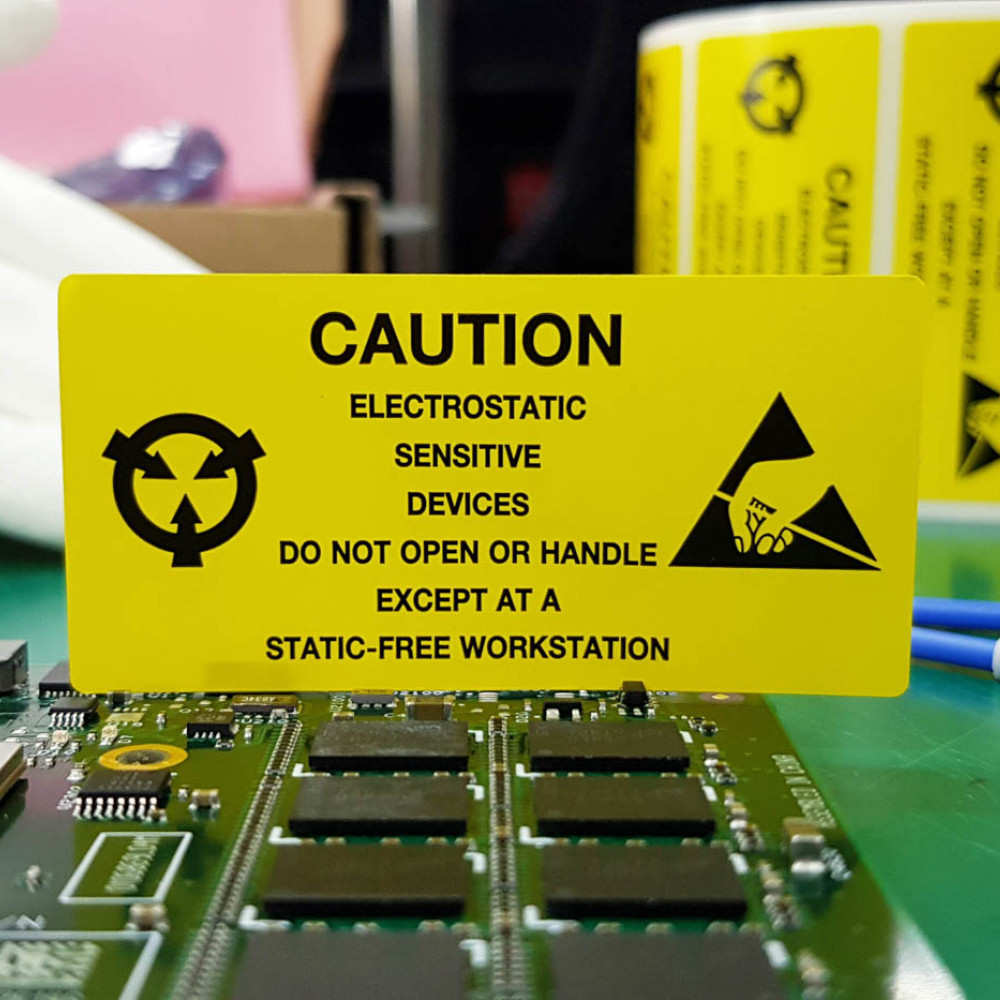
Sources of error in ESD measurement
ESD measurement is the first step towards ensuring the safety of an EPA. However, there are certain factors you should bear in mind when carrying out such a test – incorrect measurements are often caused by the Surroundings was caused, not by faulty equipment.
The Humidity has a significant influence on the discharge behaviour of certain materials. In very dry air, the tendency of materials to become charged increases sharply. In humid air, on the other hand, it decreases, due to a fine film of moisture that forms on surfaces. The comments on the measured values and the workplace therefore meets the criteria under favourable conditions. That is why environmental conditions should be taken into account in the assessment.
ESD measurements should also cover the entire workplace. Often, only worktops and shelves are tested. However, the ESD protection area extends across the entire work area – including tools, the floor, trolleys and workwear.
When carrying out ESD measurements, it is also essential that the equipment is correctly calibrated, used correctly and that measurement times are recorded accurately. You should therefore have such a test carried out by specially trained staff have it done.
How to recognise a workplace that is easy to audit
A workstation that is easy to inspect makes ESD measurement much simpler. All surfaces on which ESD-sensitive components may be placed should be included in the ESD management plan. This means it is not a problem if, on the odd occasion, a component does not end up on the tabletop. All surfaces are automatically included within the scope of the test.
Worktops should homogeneous and resistant to ageing dealt with . Thanks to conductive HPL and conductive powder coatings, you’ll enjoy years of reproducible values. KARL workstation systems feature conductive table tops, and the frames are fitted with a high-quality Powder coating treated. In addition, they have designated earth points to which both are connected. The modular accessories are designed to be conductive throughout. As a result, our workstation systems meet the requirements for use in ESD protection zones in accordance with the relevant standards.
Conclusion
To ensure the reliability of your EPA, it is essential to carry out regular ESD measurements. When doing so, you should take care to consider the environment and the equipment:
- Humidity: Guideline: maximum 55 per cent
- Material: Conductive HPL or conductive powder coating
- Measurement range: not just the tabletop, but all areas of the workstation
Thanks to their ESD-safe design, KARL workstation systems provide the ideal basis for ESD measurement. We would be happy to advise you on which system best meets your requirements.
FAQ
Other topics
The Chameleon TriMax: A look at its versatility
Production processes are changing – and with them, the demands placed on the workplace. The Chamäleon TriMax is designed to keep pace with this change: it is flexible, ergonomic and…

Why ergonomics is important in electronics manufacturing
Precision work places particular demands on ergonomics. Find out what is important when it comes to ergonomic workstations in electronics manufacturing, what role ESD protection plays, and how these two…

Industrial shelving systems: A comparison of our shelving ranges
Large, small, steel, wood – we’ve got plenty of shelving to choose from. With so much choice, it can sometimes be hard to decide. In this article, we’ll give you…

ESD measurement in industry: What is tested and when
ESD protection zone, yet a discharge occurs? This suggests that there are shortcomings in the ESD protection. There can be many reasons for this: ranging from staff error to worn-away…