 DE
DE
KARL: An Ergonomic Assessment of the Workplace
Ergonomics: Definition and Benefits
The term ‘ergonomics’ is derived from the ancient Greek words ‘ergon’ (work) and ‘nomos’ (rule). This science deals with human work processes and the design of specific work equipment. The aim is to organise work in such a way as to safeguard employees’ health whilst achieving the best possible results – both in economic and qualitative terms.
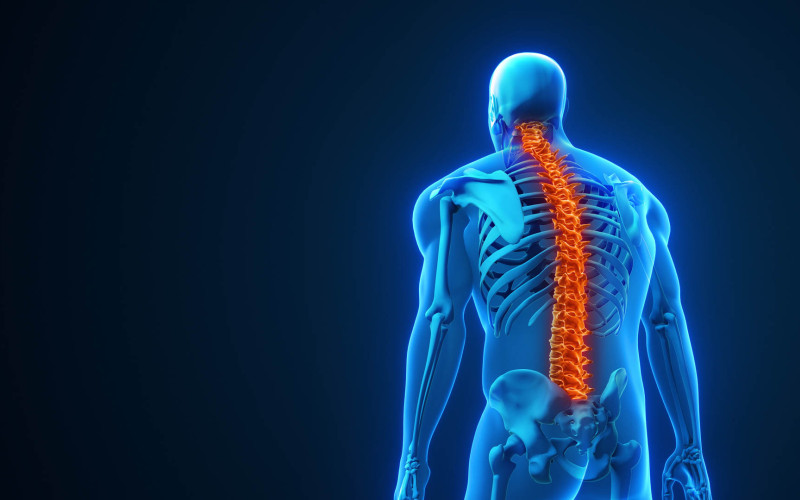
If ergonomics is neglected, it can have a negative impact on people’s health. Particularly in jobs involving repetitive movements, a lack of ergonomics often leads to musculoskeletal disorders accompanied by chronic pain. In the long term, this can result in permanent health problems, psychological strain and more frequent and prolonged periods of absence from work.
Ergonomics in manufacturing
Ergonomics is a challenge in the manufacturing sector. This is because both physically demanding tasks – such as lifting heavy objects – and work requiring fine motor skills at a desk take their toll on one’s health.
This makes it all the more important that ergonomic principles are followed in production. These principles are typically supported by workbenches that allow for an optimal sitting position. Our various models also fall into this category.
Seat position and height
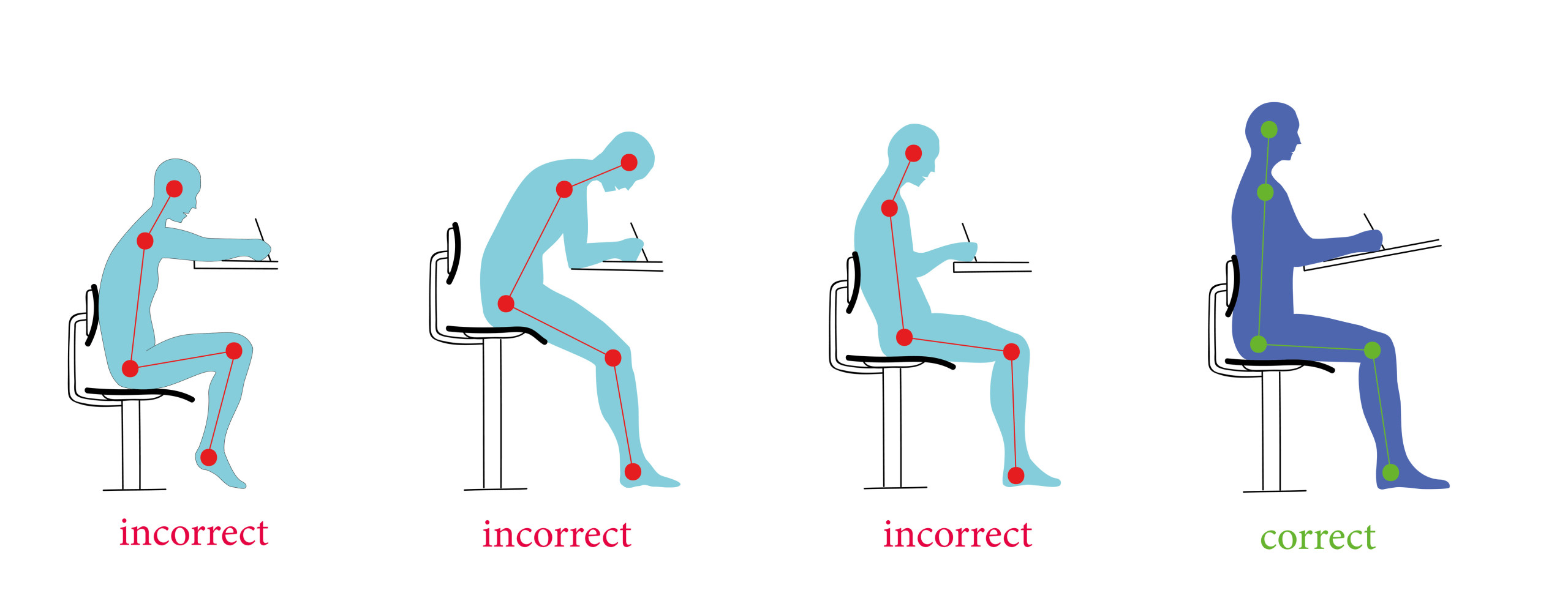
The correct sitting position relieves pressure on the spine and helps prevent muscle tension. An ergonomic chair alone is not enough. The seat height is also crucial. You should adjust it so that your upper and lower arms form an angle of approximately 90° and your forearms rest horizontally on the work surface.
There should also be a 90° angle between the upper and lower legs. The feet should be flat on the floor. You should stand upright.
However, even when sitting in the correct posture, you should not remain in that position for too long. It is therefore recommended that you alternate between sitting and standing.
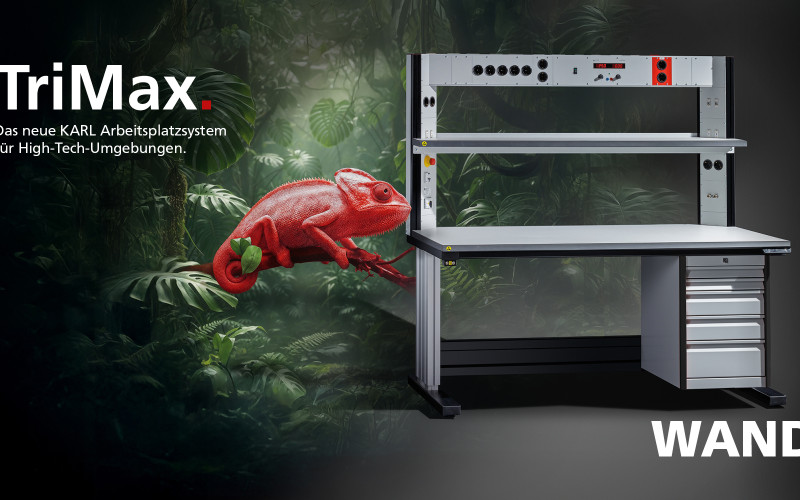
A suitable workstation allows you to sit in this position – and also to change positions. As the optimum seat height varies from person to person, a height-adjustable desk is advantageous. Some desks can save settings for different people, and at the start of the working day, each employee simply selects their preferred setting. This also includes our TriMax.
Working correctly whilst standing: Here’s how
To reap the benefits of alternating between sitting and standing, it is also important to maintain correct posture. After all, not all standing is the same. Incorrect weight distribution, tense shoulders and uneven strain are harmful whether you are sitting or standing.
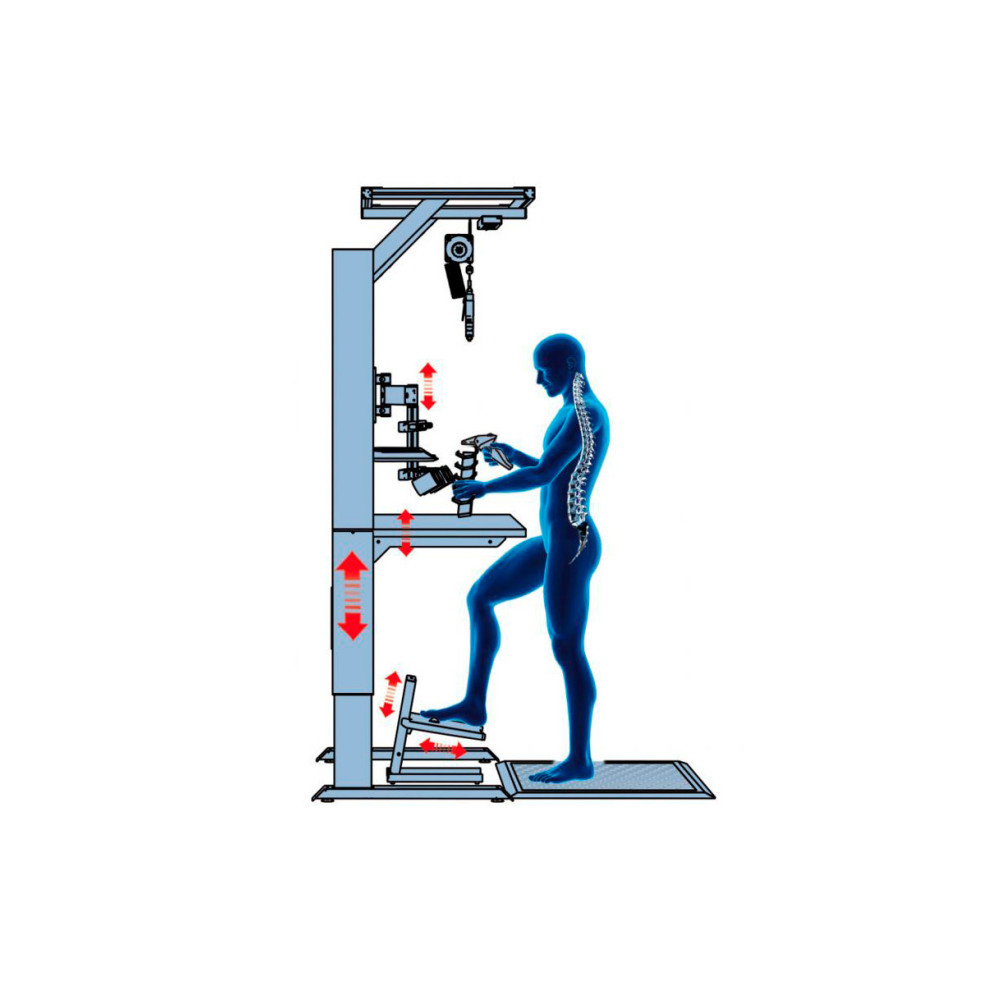
Essentially, the same rules apply as when sitting: adjust the height of the table so that your forearms rest roughly horizontally and your shoulders remain relaxed. Here, too, your upper and lower arms should form an angle of approximately 90°.
Keep your spine straight, as if you were being pulled vertically upwards by an invisible string. A common mistake here is the tendency to arch your back. You should therefore also ensure that your pelvis does not tilt forwards. Distribute your weight evenly between both legs.
The same applies here: don’t stand for too long. Give your legs a rest by sitting down.
Reach and movements
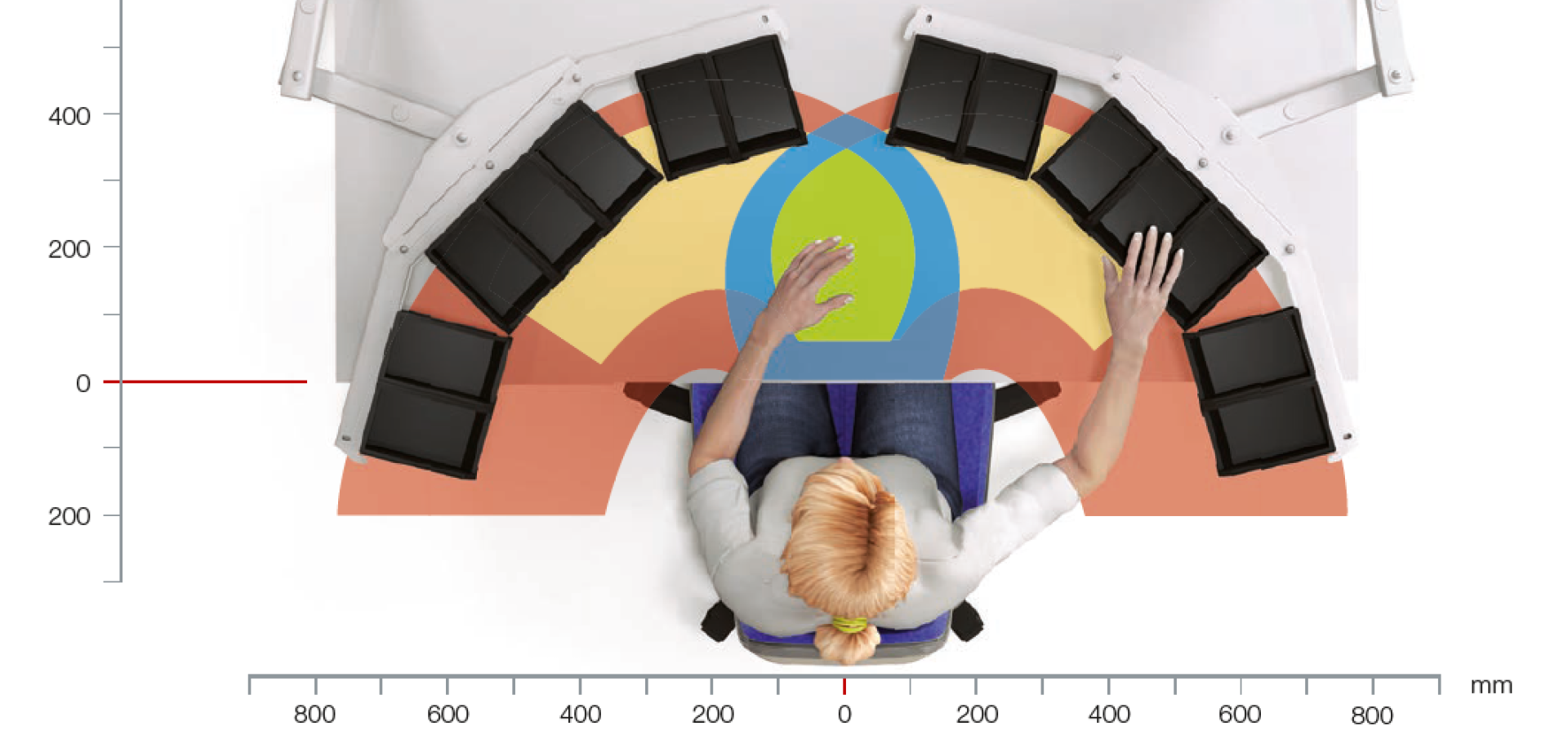
The correct seat height not only affects the alignment of the spine, but also the reach and the associated movements. The layout of work equipment is determined by the user’s body measurements and movement patterns.
You should always position frequently used work equipment within easy sight and reach. As this area varies from user to user, a modular workstation is ideal in this respect. This allows each employee to set up their workspace optimally at the start of their shift. A workbench such as the TriMax allows these adjustments to be made quickly and without tools.
Surroundings: The best lighting conditions
You’ve no doubt experienced for yourself just how much lighting conditions can affect your work. If it’s too dark, your eyes have to work harder. What’s more, your concentration wanes and your body starts to feel tired. Light that’s too bright, on the other hand, is dazzling and restricts your vision.
Ergonomic lighting is therefore tailored to the task at hand, the time of day and the individual needs of the employee. It is achieved through the optimal balance of daylight, ambient lighting and targeted task lighting. Ergonomic workstation systems – such as QUADRO and TriMax – are often fitted with system lights that provide optimum illumination of the work surface. This aids concentration and reduces errors.
Conclusion: How to create an ergonomic workplace
As you can see, an ergonomic workplace involves more than just comfortable chairs. It is based on a holistic approach and takes the entire working environment into account. This includes:
- Height-adjustable workbenches
- Optimal reach and manoeuvring space
- Optimised lighting conditions
In manufacturing in particular, the principles of ergonomics should be strictly adhered to. Repetitive movements and one-sided strain pose a risk to employees’ health. By prioritising ergonomic workplace design, organisations can promote employees’ health and prevent absenteeism.
You too can create an ergonomic workspace with desks from KARL.
More interesting facts
How the workplace system in the defence sector remains flexible
The defence industry is expected to deliver faster than ever before, yet no one knows how long demand will remain high. What is needed is a manufacturing process that can…

The dangers of electrostatic discharge (ESD)
A tiny spark with major consequences: electrostatic discharges can damage or completely destroy electronic components – sometimes without anyone even noticing. In this article, you’ll find out what risks ESD…

The Chameleon TriMax: A look at its versatility
Production processes are changing – and with them, the demands placed on the workplace. The Chamäleon TriMax is designed to keep pace with this change: it is flexible, ergonomic and…
Why ergonomics is important in electronics manufacturing
Precision work places particular demands on ergonomics. Find out what is important when it comes to ergonomic workstations in electronics manufacturing, what role ESD protection plays, and how these two…