

Lean Production in safety-critical sectors
Lean production helps companies to reduce waste and make processes more efficient. However, in safety-critical sectors such as defence, aviation and medical technology, quality and safety must be guaranteed in equal measure. In this article, you can read about the role the workplace plays in this and how Lean principles can be successfully implemented.
Lean Production: Still relevant today
Reducing waste, boosting productivity and remaining flexible in the process – even today, some 70 years after its inception, lean production remains a contemporary manufacturing principle. Lean production involves using resources from all areas of the business sparingly and efficiently in order to keep production lean and reduce costs.
However, in safety-critical sectors such as the defence industry, aviation or medical technology, it is not enough simply to speed up processes. In these sectors, productivity, quality and safety must always go hand in hand. Measures are therefore needed to keep error rates consistently low whilst responding in real time to the demands of Industry 4.0.
What is lean production?
Lean production, or lean manufacturing, is a sub-area of lean management. Lean production aims to eliminate all unnecessary steps in the production process through intelligent organisation. The aim is to eliminate waste and speed up production. This is intended to lay the foundations for responding rapidly to constantly changing market conditions. Put simply, the concept of lean production encompasses:
- Increasing productivity
- Improving product quality
- Greater flexibility
In practical terms, this means that stock levels are kept low, underutilised capacity is reduced and lead times are shortened. Production is organised on a just-in-time basis. This means that materials are delivered exactly when they are needed for production. For example: when assembling a military vehicle, numerous components from various suppliers are brought together. To avoid high stock levels, the components are delivered to the assembly line exactly when they are due to be processed.
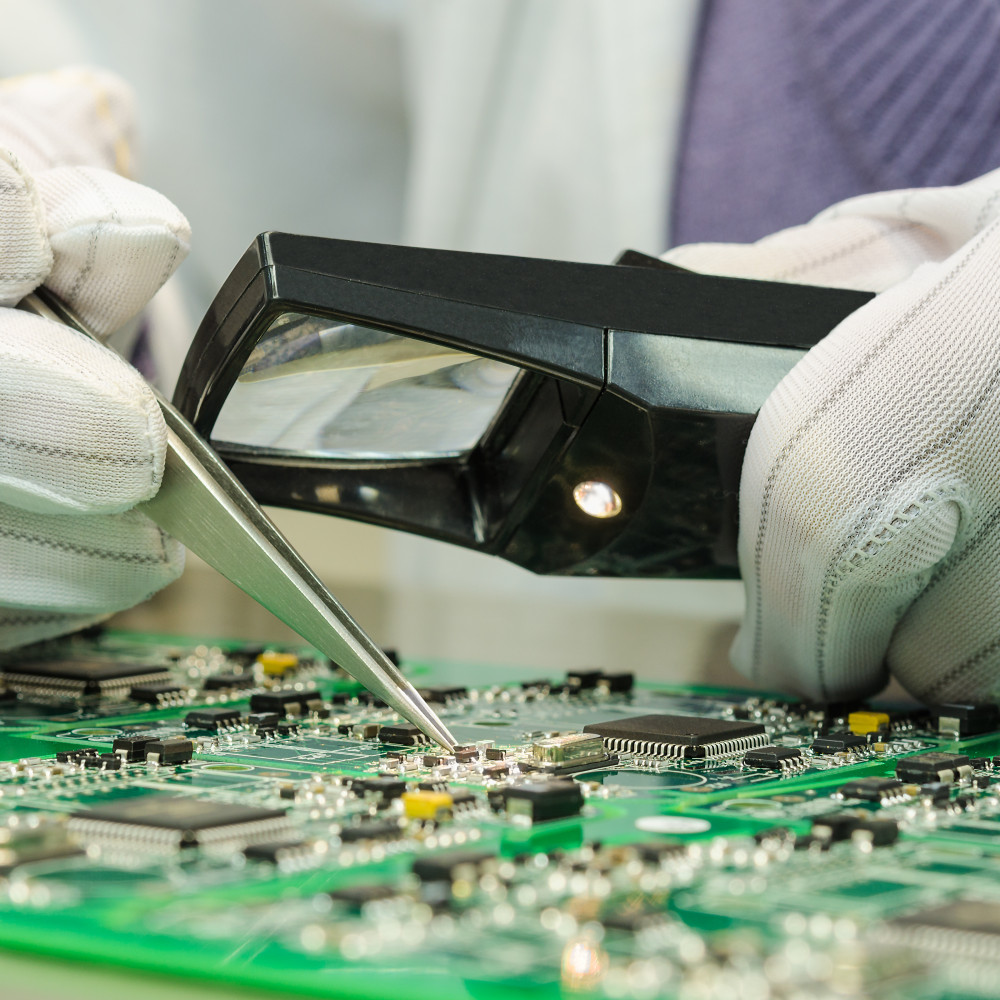
Lean production in safety-critical sectors
The specialist literature clearly shows that the focus of lean production is on streamlining and simplifying processes – ultimately to reduce costs. In safety-critical sectors, such as the defence industry, however, quality control is the top priority. This is because production faults can have serious consequences in these sectors. The challenge lies in reconciling the highest safety standards with lean production.
Standardisation is a common strategy in lean production. It defines the best-known method currently available for carrying out a production step. The principle behind it is that if every employee carries out the same task in the same way, there will be fewer variations and fewer errors.
This shows that quality and efficiency are not mutually exclusive. Instead, lean principles provide the framework for meeting delivery deadlines, producing cost-effectively and, at the same time, meeting the highest quality standards. The aim is therefore not necessarily to work faster, but to design processes in such a way that errors do not occur in the first place. At the heart of this is an optimally organised workplace.
The workplace as a key factor in lean management
In practice, it is often not the process itself but the working environment that costs us valuable time. In poorly organised workplaces, work materials are rarely exactly where they are needed. The time spent searching for them quickly adds up, and production is held up. This is particularly the case when work surfaces are cluttered or materials are not laid out in an intuitive way. That is why the 5S method is often used in lean production:
- Sort by: Get rid of unnecessary items
- Systematise: Take account of optimal gripping spaces
- Cleaning: Regular cleaning
- Standardise: Clear rules, checklists and work instructions
- Self-discipline: Follow the 5S principles and make them part of your routine
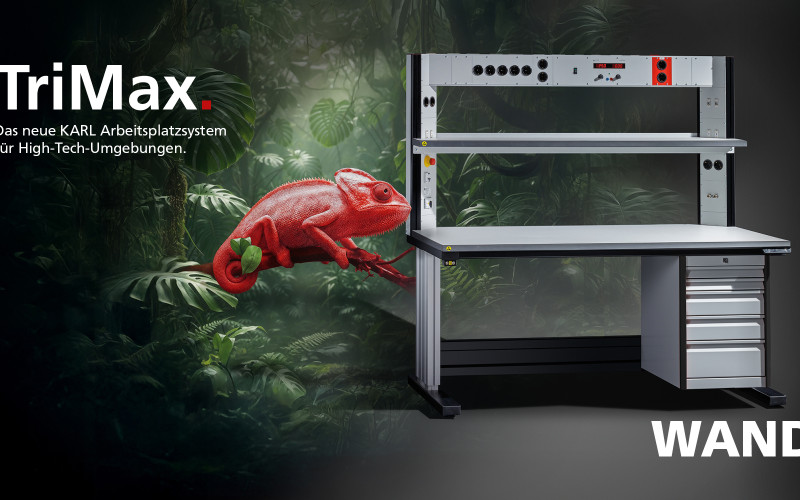
A suitable workstation system supports the 5S method by incorporating its principles right from the design stage. Workbenches such as TriMax are designed to enable materials to be organised clearly and within easy reach. As these workbenches can often be configured for different members of staff, the standardised workflow remains the same without compromising on ergonomics.
A workplace based on Lean Production must remain flexible. In the defence sector in particular, requirements change frequently. New assemblies, bespoke products and varying batch sizes are part of everyday life here. Work surfaces, material supply and accessories must be able to be adapted quickly to the new circumstances. A modular workstation system that is easy to reconfigure provides the basis for this. This makes lean production possible even in complex and safety-critical manufacturing environments.
Checklist: Is your workplace ready for lean production?
To ensure that your safety-critical workplace is ready for lean production, you should bear the following points in mind:
- Materials are within easy reach and have designated places
- The workplace is tidy and clean
- Materials are provided as and when required
- Work instructions are easily accessible
- The workplace can be flexibly adapted to new processes
- Sources of error are minimised through clear structures
- Staff can quickly implement improvements themselves
Do you have any questions about workstations for lean production? We’d be happy to answer them. Get some advice now, with no obligation!
Further articles
How the workplace system in the defence sector remains flexible
The defence industry is expected to deliver faster than ever before, yet no one knows how long demand will remain high. What is needed is a manufacturing process that can…

The dangers of electrostatic discharge (ESD)
A tiny spark with major consequences: electrostatic discharges can damage or completely destroy electronic components – sometimes without anyone even noticing. In this article, you’ll find out what risks ESD…
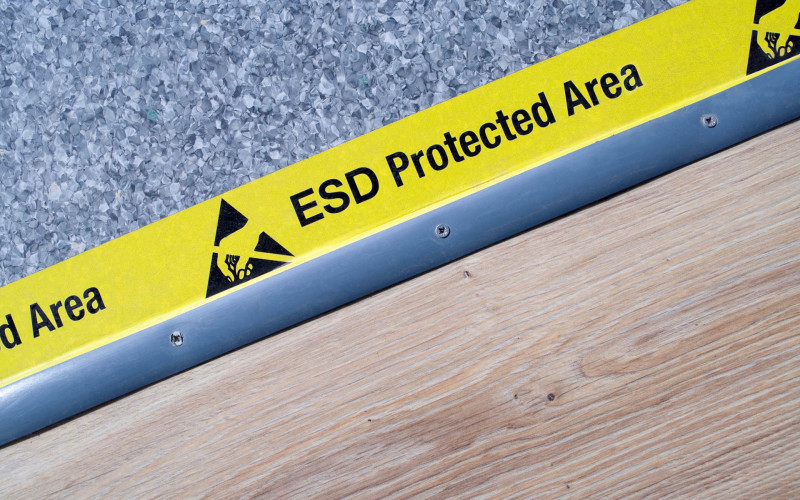
The Chameleon TriMax: A look at its versatility
Production processes are changing – and with them, the demands placed on the workplace. The Chamäleon TriMax is designed to keep pace with this change: it is flexible, ergonomic and…
Why ergonomics is important in electronics manufacturing
Precision work places particular demands on ergonomics. Find out what is important when it comes to ergonomic workstations in electronics manufacturing, what role ESD protection plays, and how these two…