 DE
DE

What is FIFO?
There are various approaches to ensuring an efficient flow of materials. One of the best known is FIFO. Specialised racking and workstations ensure a structured supply of materials in warehouse logistics and production.
Find out how FIFO works and in which sectors it is used in this article.
FIFO: Definition and Process
In inventory management, the FIFO principle describes a method whereby goods are processed or withdrawn in the order in which they were previously stored. FIFO stands for the English term “First In, First Out“. As the name suggests, the FIFO rule assumes that goods which arrived at the warehouse first are also the first to leave the warehouse.
The FIFO method is primarily used where goods become obsolete or perish over time. Where possible, the oldest stock – the stock that was stored first – is therefore used up first. As a result, FIFO reduces inventory risk – that is, the risk that stock may deteriorate in quality whilst in storage.
In which sectors is FIFO used?
The FIFO method is therefore used precisely when the consumption of a good time-critical is. This is, of course, the case with food – but not only there. In the pharmaceutical sector, too, FIFO is essential because of use-by dates and legal requirements. Many cosmetic products – such as sun cream – have a use-by date.
This may come as a surprise to many people: even in the Electronics manufacturing FIFO comes into play here. Although the raw materials are not perishable, certain components should not be left in storage for too long. These include batteries and parts with serial numbers. Some adhesives, cleaning products and paints lose their characteristic properties after being stored for too long.
It is therefore clear that FIFO can be beneficial not only for consumables. Numerous sectors benefit from the ‘first in, first out’ principle – and it is not only perishable goods that lose quality over time.
FIFO racking and FIFO workstations in production
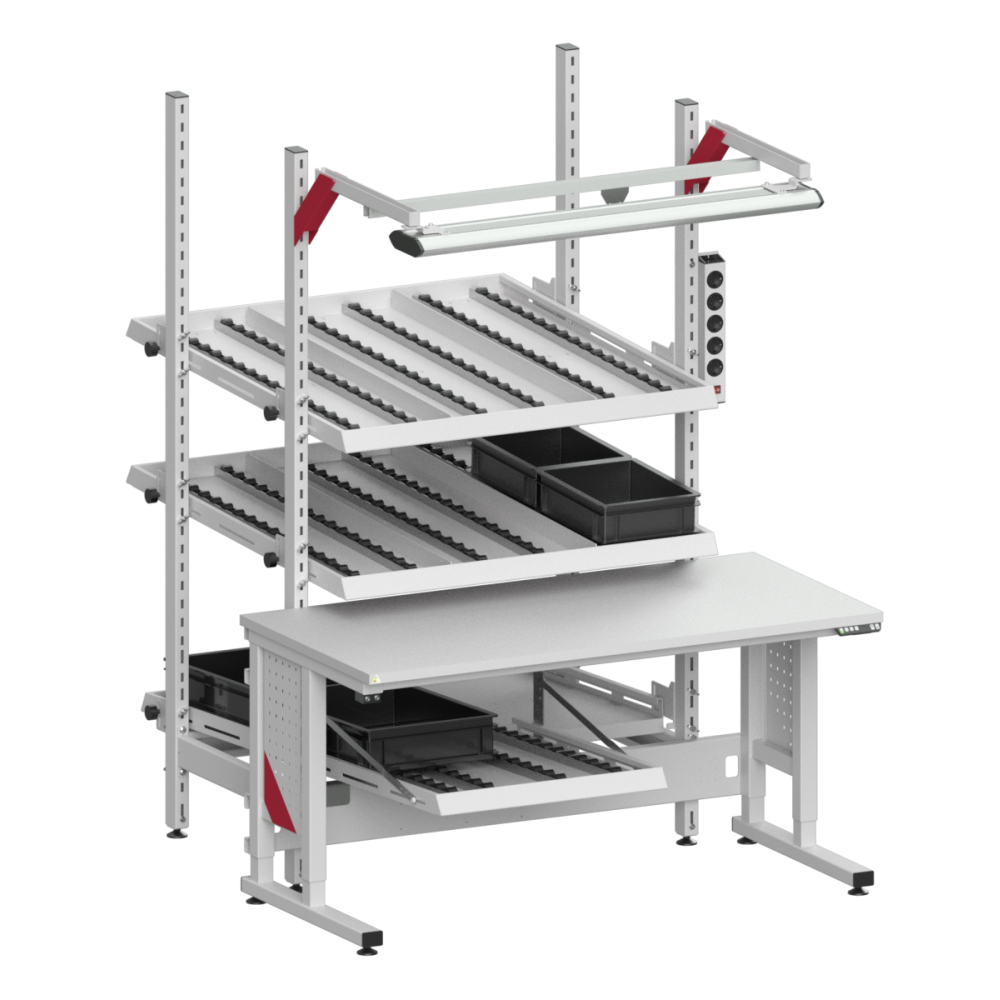
The FIFO method requires the correct set-up. This involves the use of specialised table systems, shelving and storage units for the return process. A FIFO workstation is designed in such a way that the supply of materials ensures that the optimal material flow enables.
A FIFO rack uses sloping shelves to ensure that containers move automatically from the loading side to the unloading position. Some models can also be fitted with dividers and roller strips to facilitate movement. These include our FIFO systems. They consist of a base unit. Shelves, dividers, roller strips and swivel castors can be combined as required.
Ideally, the entire workstation is optimised for the FIFO principle, for example by allowing the shelves to be attached directly to the table frames. This is possible with our SINTRO possible. This means that FIFO does not end at the shelf, but continues right into the employee’s picking zone. Less time spent searching, fewer errors and less waste – tailor-made for the requirements of Lean Production.
FIFO and ESD safety
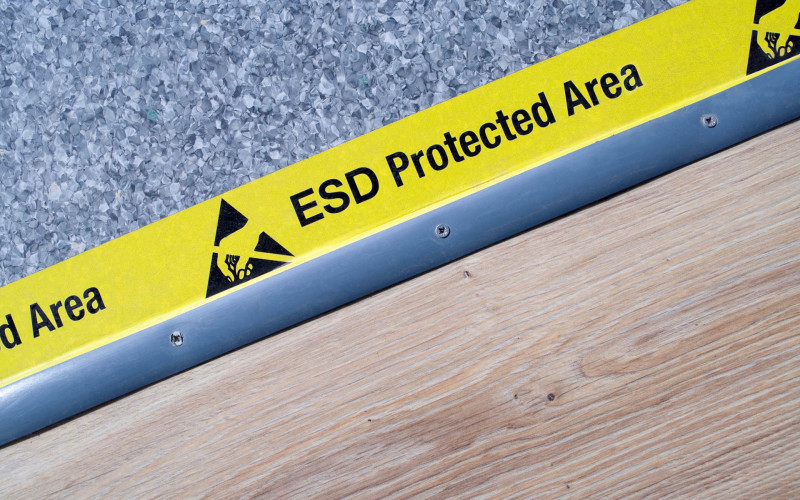
For many of our customers, ESD safety (electrostatic discharge) is crucial. In an ESD-safe working environment, all components form part of the safety net. The measures range from clothing to flooring and work surfaces – and therefore also include FIFO systems.
That is why our FIFO racks, shelves and CARs are available in an ESD version as an option, in accordance with IEC 61340-5-1. This is how we ensure that ESD safety is maintained throughout the entire manufacturing process.
FIFO: More than just a shelf
FIFO is used primarily in warehouse logistics, production, electronics manufacturing, the pharmaceutical industry and the food industry. It ensures clear material flows and helps companies to Using materials sensibly. The advantages of FIFO:
- lower inventory risks
- less waste
- shorter search times
- structured material flows
- more efficient production processes
- greater availability of materials
To ensure that the FIFO principle operates reliably in day-to-day operations, the right systems are required. FIFO racking, ergonomic workstation solutions and ESD-safe designs enable a safe and efficient supply of materials – from the warehouse straight to the workstation.
FAQ
Further articles
How the workplace system in the defence sector remains flexible
The defence industry is expected to deliver faster than ever before, yet no one knows how long demand will remain high. What is needed is a manufacturing process that can…

The dangers of electrostatic discharge (ESD)
A tiny spark with major consequences: electrostatic discharges can damage or completely destroy electronic components – sometimes without anyone even noticing. In this article, you’ll find out what risks ESD…
The Chameleon TriMax: A look at its versatility
Production processes are changing – and with them, the demands placed on the workplace. The Chamäleon TriMax is designed to keep pace with this change: it is flexible, ergonomic and…
Why ergonomics is important in electronics manufacturing
Precision work places particular demands on ergonomics. Find out what is important when it comes to ergonomic workstations in electronics manufacturing, what role ESD protection plays, and how these two…