
 DE
DE

Why ergonomics is important in electronics manufacturing
Precision work places particular demands on ergonomics. Find out what is important when it comes to ergonomic workstations in electronics manufacturing, what role ESD protection plays, and how these two requirements can be effectively combined.
Ergonomics in electronics manufacturing: what matters most
What constitutes an ergonomic workplace depends on the type of work involved. In electronics manufacturing, the key factors are Precision . Whilst ergonomic measures therefore focus less on issues such as lifting correctly, they are Viewing distance, reach zones and seating position all the more important.
Anyone who works with great attention to detail unconsciously moves closer to the workpiece. The result: raised shoulders, hunched back, narrow sitting distance. If this posture is maintained for a long time, it may, in the long run, lead to Musculoskeletal disorders lead to chronic pain. In the worst-case scenario, this can result in permanent damage to health and associated prolonged absences from work. A ergonomically designed workstation It should therefore not only ensure the correct sitting position but also allow for adjustments to suit the task and the individual.
How to create an ergonomic workplace
An ergonomic workplace is designed using a holistic approach. It encompasses all aspects of the working environment:
- Seat position and height: With your back straight, your upper and lower arms should rest on the work surface at a 90° angle. Your upper and lower legs should form a 90° angle with each other.
- Standing correctly: Here, too, the upper and lower arms form an angle of approximately 90° on the work surface. The spine remains upright.
- Change of position: Make the most of the benefits of a height-adjustable desk. Alternate between standing and sitting. Never stand for too long.
- Reach and movement: Place frequently used work equipment where it is clearly visible and within easy reach.
- Surroundings: Not too bright and not too dim – adjust the light so that it illuminates the work surface perfectly. That way, you won’t have to get too close to the workpiece, even when carrying out precise work.
You can find more information in our Ergonomic assessment of industrial workstations.

Ergonomics alone is not enough: ESD protection must also be taken into account
However, ergonomics alone does not make for a suitable workplace in electronics manufacturing. This is because, in addition to the people working there, the sensitive components are protected. This raises a second requirement: ESD safety.
ESD stands for Electrostatic Discharge – that is, electrostatic discharge. It occurs invisibly and causes sensitive electronic components to stop functioning reliably. This damage is often only noticed by the end user.
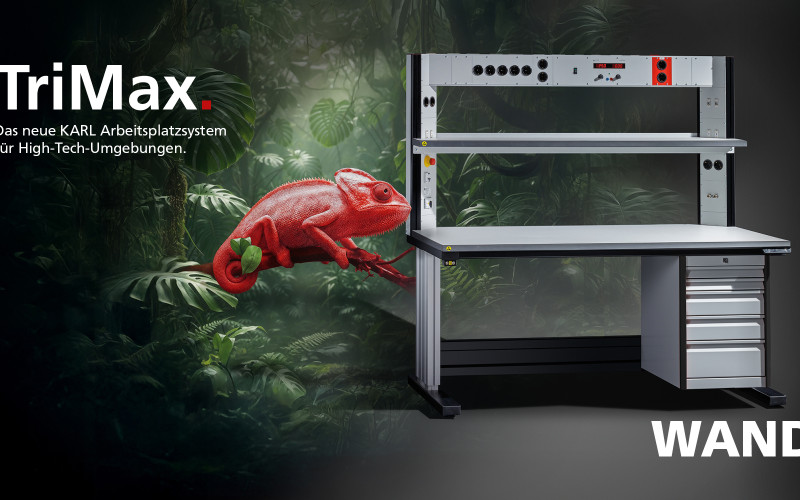
To prevent electrostatic discharge, so-called Electrostatic Protected AreaThis applies to certain types of clothing, materials and surface treatments. As a general rule, all components of an ESD workstation must be at the same earth potential – from the floor covering, through the table and chair, to the person at the workstation. One example of such an ESD workbench is the TriMax by KARL.
Ergonomics and ESD safety combined: TriMax
When choosing the right workstation system for electronics manufacturing, ergonomics and ESD safety are therefore key. Consequently, you need furniture that has been treated to ensure ESD safety and also complies with ergonomic principles.
One workstation system that combines these requirements is TriMax from KARL. It is specifically designed for high-tech environments where sensitive electronic components are handled on a daily basis. It meets the highest standards in terms of ESD safety. At the same time, ergonomics have not been overlooked. Multiple working heights can be individually adjusted and saved. The workbench also features a modular design: elements can be arranged easily and without tools to suit different reach requirements.
Conclusion: The right workstation combines ergonomics and ESD safety
One thing is clear: in electronics manufacturing, neither ESD safety nor ergonomics can be overlooked. Whilst ESD protection safeguards sensitive components against electrostatic discharge, ergonomic design helps to reduce the physical strain on staff.
A suitable workplace inherently meets both requirements. Individually adjustable working heights, optimised reach areas and suitable lighting create the ideal conditions for precision work. And that is precisely what is required in electronics manufacturing.
Checklist: Is your workplace suitable for electronics manufacturing?
- Can the working height be adjusted to suit individual needs?
- Can employees alternate between sitting and standing?
- Can tools be placed within easy reach?
- Is there suitable lighting?
- Is the entire system designed for use in an EPA?
Is there still room for improvement? We’d be happy to help you design an ergonomic workstation for electronics manufacturing.
Frequently Asked Questions
Further information on ESD, ergonomics and Industry 4.0
How the workplace system in the defence sector remains flexible
The defence industry is expected to deliver faster than ever before, yet no one knows how long demand will remain high. What is needed is a manufacturing process that can…

The dangers of electrostatic discharge (ESD)
A tiny spark with major consequences: electrostatic discharges can damage or completely destroy electronic components – sometimes without anyone even noticing. In this article, you’ll find out what risks ESD…

The Chameleon TriMax: A look at its versatility
Production processes are changing – and with them, the demands placed on the workplace. The Chamäleon TriMax is designed to keep pace with this change: it is flexible, ergonomic and…
Why ergonomics is important in electronics manufacturing
Precision work places particular demands on ergonomics. Find out what is important when it comes to ergonomic workstations in electronics manufacturing, what role ESD protection plays, and how these two…